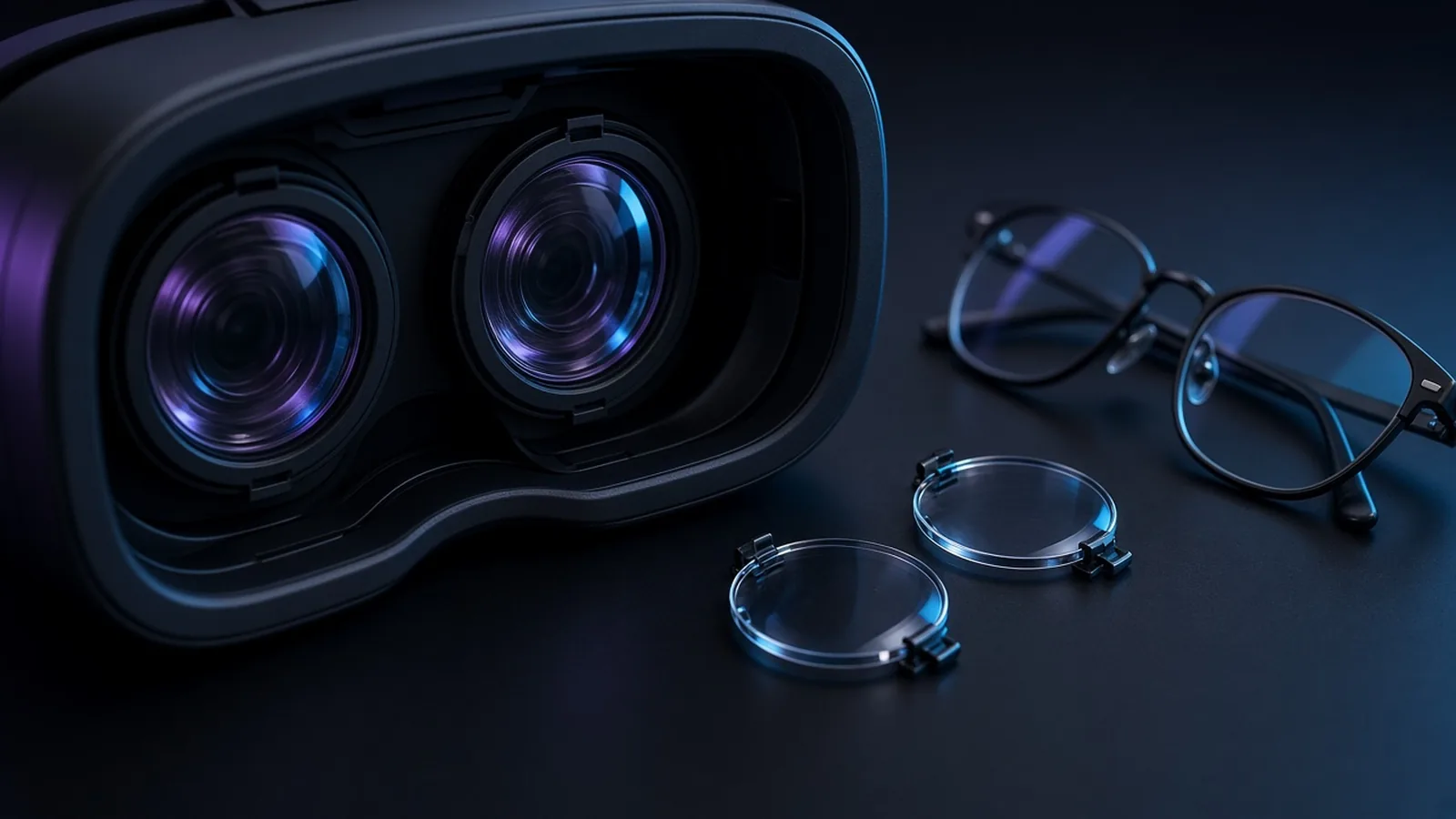
Your Quest 3 is incredible, but if you wear glasses, taking them off to play means blur, smudges, and the nose bridge soreness that comes from pushing your prescription glasses inside a headset. Prescription lens inserts sit between the headset and your eyes, so you keep your exact correction in every session.
Prescription lens inserts for the Quest 3 and 3S come in two shapes: preset-strength lenses you buy off the shelf in a fixed SPH range, and per-degree lenses sold one lens at a time so each eye gets its own power. Both clip onto the stock lens housing, both ship from Amazon, and both cost less than a custom optical order. Here are the best Quest 3 prescription lenses in 2026, ranked by clarity, comfort, and value.
Quick Verdict
| Lenses | Best For | Must-Have? |
|---|---|---|
| Maxonar Myopia Lens Inserts | Mild prescriptions (-1.0 to -3.0) | If mild |
| PSI Per-Degree Lens Insert | Different strengths per eye | If your eyes differ |
| Maxonar High-Power Lens Inserts | Stronger prescriptions (-4.0 and up) | If -4.0 and up |
| Quest 3 Lens Protector | Scratch protection | Yes |
1. Maxonar Myopia Lens Inserts (-1.0 to -3.0) — Best for Mild Nearsightedness
Maxonar sells preset-strength inserts for the Quest 3 and 3S, one lens per eye, ordered by SPH value in quarter steps. Pick your strength at checkout, clip the frame onto the lens housing, and you are done. No prescription upload, no custom order, no waiting on shipping.
Why it works: The insert sits in a clip-on frame that fixes the distance between your eye and the Quest 3 display, so the lens stays centred while you move. For myopia between -1.0 and -3.0, a preset lens delivers most of the clarity of a ground custom pair at a fraction of the cost, and the anti-blue-light coating takes the glare off the LCD panels.
Pros: Cheap, ready to use, no prescription paperwork, fits Quest 3 and 3S, ordered per eye
Cons: Sold per lens so a pair costs double, fixed strengths only, not for astigmatism
Maxonar Myopia Lens InsertsCheck price on Amazon
2. PSI Per-Degree Prescription Lens Insert — Best for Exact Single-Eye Strength
PSI sells its Quest 3 inserts one lens at a time, left or right, with the SPH value printed in the listing. That matters if your two eyes are different strengths, which is most people: buy a -2.25 for one eye and a -3.50 for the other, and each eye gets its own correction instead of a compromise.
Why it works: Per-degree ordering is the closest you can get to a custom prescription without sending in your Rx. The lens clips into the Quest 3 housing, the anti-blue-light coating softens the display, and because every lens is its own purchase you can replace a single lost lens rather than a whole set.
Pros: Exact SPH per eye, mix left and right powers, anti-blue-light coating, cheap to replace one lens
Cons: A pair is two separate purchases, the frame flexes if the strap is overtightened, not for astigmatism
PSI Per-Degree Lens InsertsCheck price on Amazon
3. Maxonar High-Power Lens Inserts (-4.0 and up) — Best for Stronger Prescriptions
The same Maxonar frame comes in higher SPH values, up to about -6.0. If your eyesight is beyond the mild range, this is the step up, and it still costs less than a custom optical order.
Why it works: The higher power range covers the most common myopia values above what the basic presets provide. If you have a stronger prescription and want to skip the custom-order cost, this is the best budget option on this list.
Pros: Covers -4.0 and up, no prescription needed, fits Quest 3, cheap per lens
Cons: Not quite as clean as a true custom pair, edge distortion at high powers, not for astigmatism
Maxonar High-Power Lens InsertsCheck price on Amazon
4. Quest 3 Lens Protector — Best Scratch Protection
If you do not need a prescription, the cheapest and most practical upgrade is a clear lens protector. It shields the Quest 3 display lenses from dust, scratches, and sunlight (prolonged direct sun can damage the screens), and it snaps on without adhesive.
Why it works: A lens protector is the cheapest insurance on this list. It is the same product in our complete Quest 3 accessory kit, and it keeps the lens glass clean even when the headset is cycled in a bag or case.
Pros: Cheap, snap-on, no residue, protects display glass
Cons: No vision correction, thin plastic can show fingerprints if not cleaned
Quest 3 Lens ProtectorCheck price on Amazon
Which Quest 3 Lenses Should You Get?
- Mild myopia, -1.0 to -3.0: Maxonar preset inserts
- Different strengths in each eye: PSI per-degree inserts
- Stronger myopia, -4.0 and up: Maxonar high-power inserts
- No prescription, just protection: Lens protector
Buy by eye, not by pair. Every insert on this list is sold as a single lens, so a full set is two items in your cart: check the SPH number and which eye it belongs to before you order. None of these correct astigmatism, so if your Rx carries a cylinder value, keep your glasses on inside the headset, adjust the IPD, and skip the inserts.
Pair your lenses with the Meta Quest 3 for the best overall experience, or the Quest 3S for a cheaper start.